Sparse prompt vs. saturated prompt
Same model, same task, two prompts. I verified every verdict against the running pages, screenshot by screenshot.
Here's the setup. The sparse prompt was one line:
"Build a page where managers can review pending expense exceptions."
The saturated prompt was the same request with the user, the data, the four states, the confirmation gate, the security,
and the audit spelled out. Every requirement in the table below existed in my head both times. The only question was who
made each decision: me, or the model.
Prompt A · sparse (10 words)
Build a page where managers can review pending expense exceptions.
Prompt B · saturated (152 words)
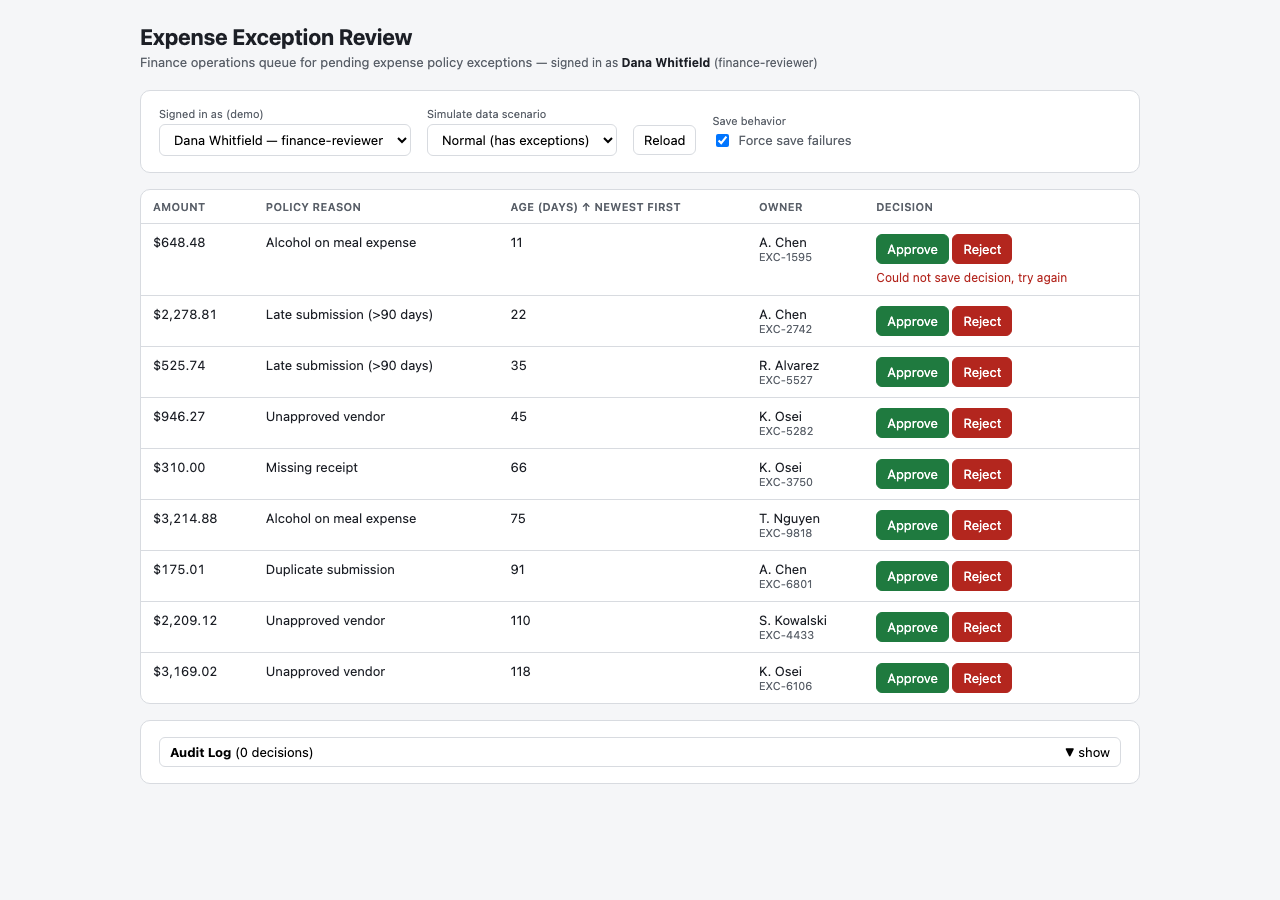
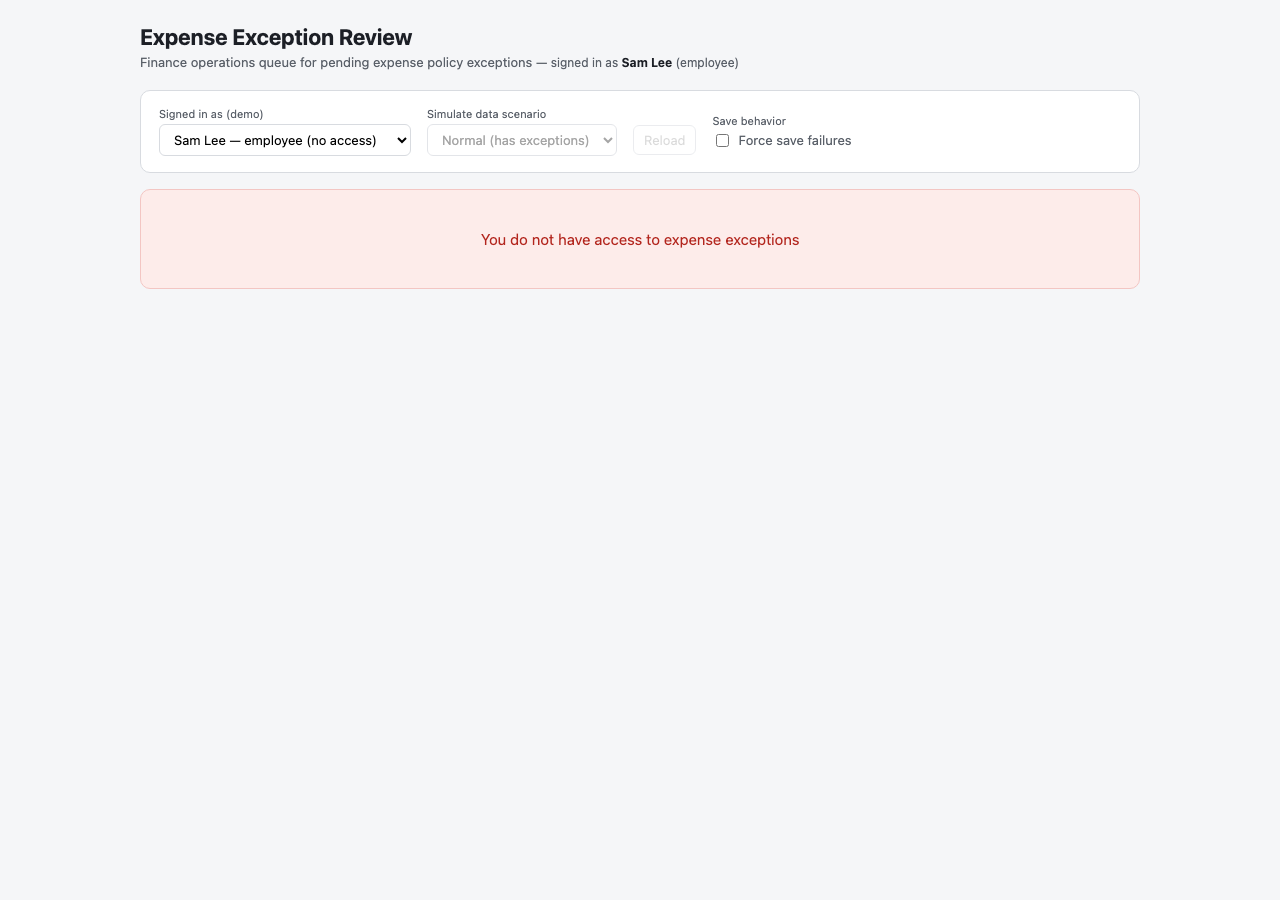
Build a page where a finance operations reviewer can review pending expense exceptions. The page reads exception records with these fields: amount, policy reason, age in days, and owner. Show them in a table, newest first. The page needs four states: loading, empty (say 'No pending exceptions'), permission denied (say 'You do not have access to expense exceptions'), and service failure (say 'Could not load exceptions, try again'). The reviewer can approve or reject each exception, but any decision requires an explicit confirmation dialog before it takes effect, and a failed save must not show the row as decided. Only users with the role 'finance-reviewer' may see data or take actions; check the role before rendering. Every decision must append an audit entry recording the decision, the actor, the timestamp, and the record id, shown in a collapsible audit log at the bottom. Use synthetic demo data, no real systems. Single-file HTML/JS.
3 / 13
Sparse prompt · requirements met (3 more partial)
13 / 13
Saturated prompt · requirements met
| Requirement (from the saturated prompt) | Sparse build | Saturated build |
|---|---|---|
R1 Only role finance-reviewer may see data or act; check before rendering |
FAILHardcoded "Jordan Price (Manager)". Its own assumptions admit: "No access control enforcement, anything reachable by URL is fully visible." | PASSRole checked before any fetch or render; non-reviewer sees only the denial banner.Evidence: sat-denied.png |
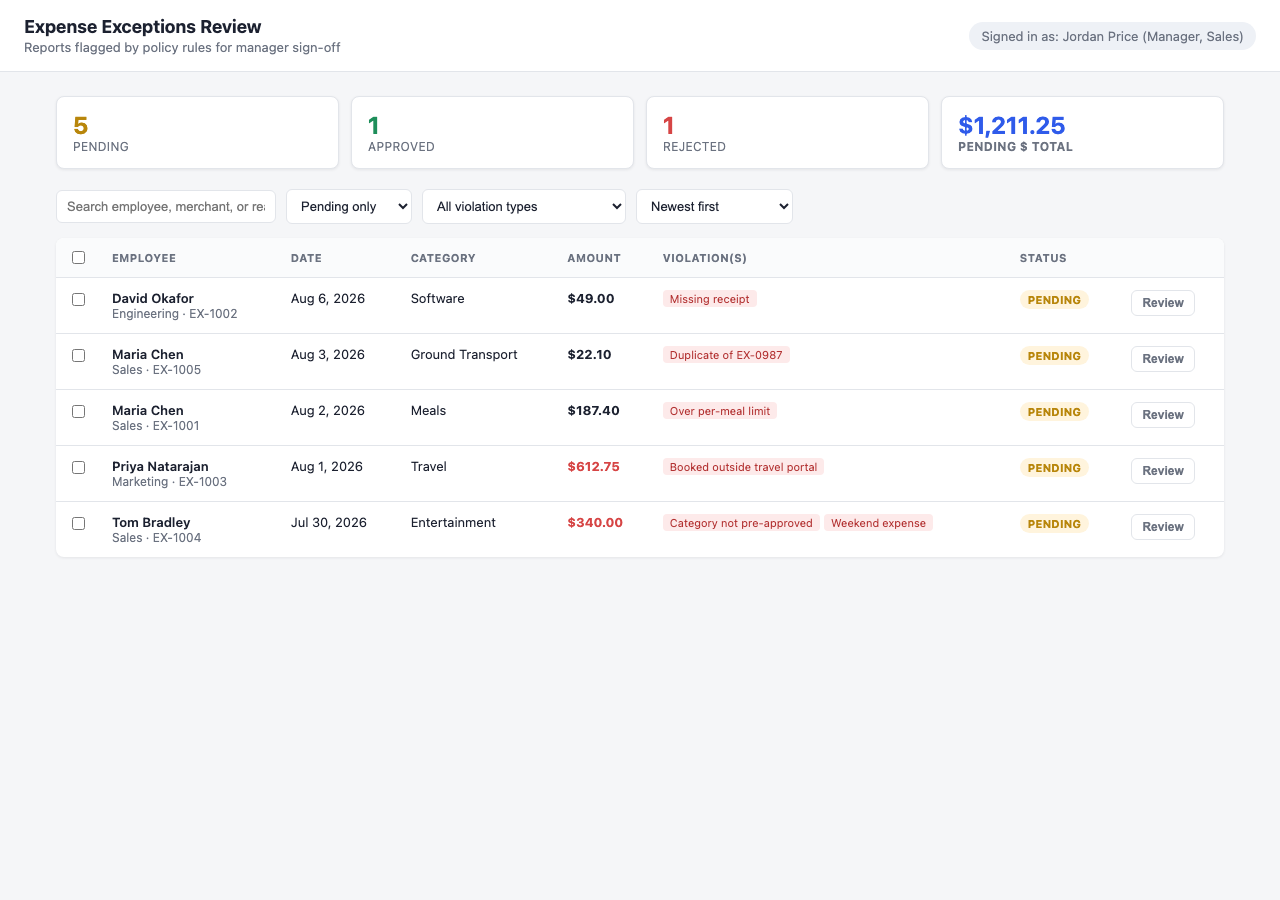
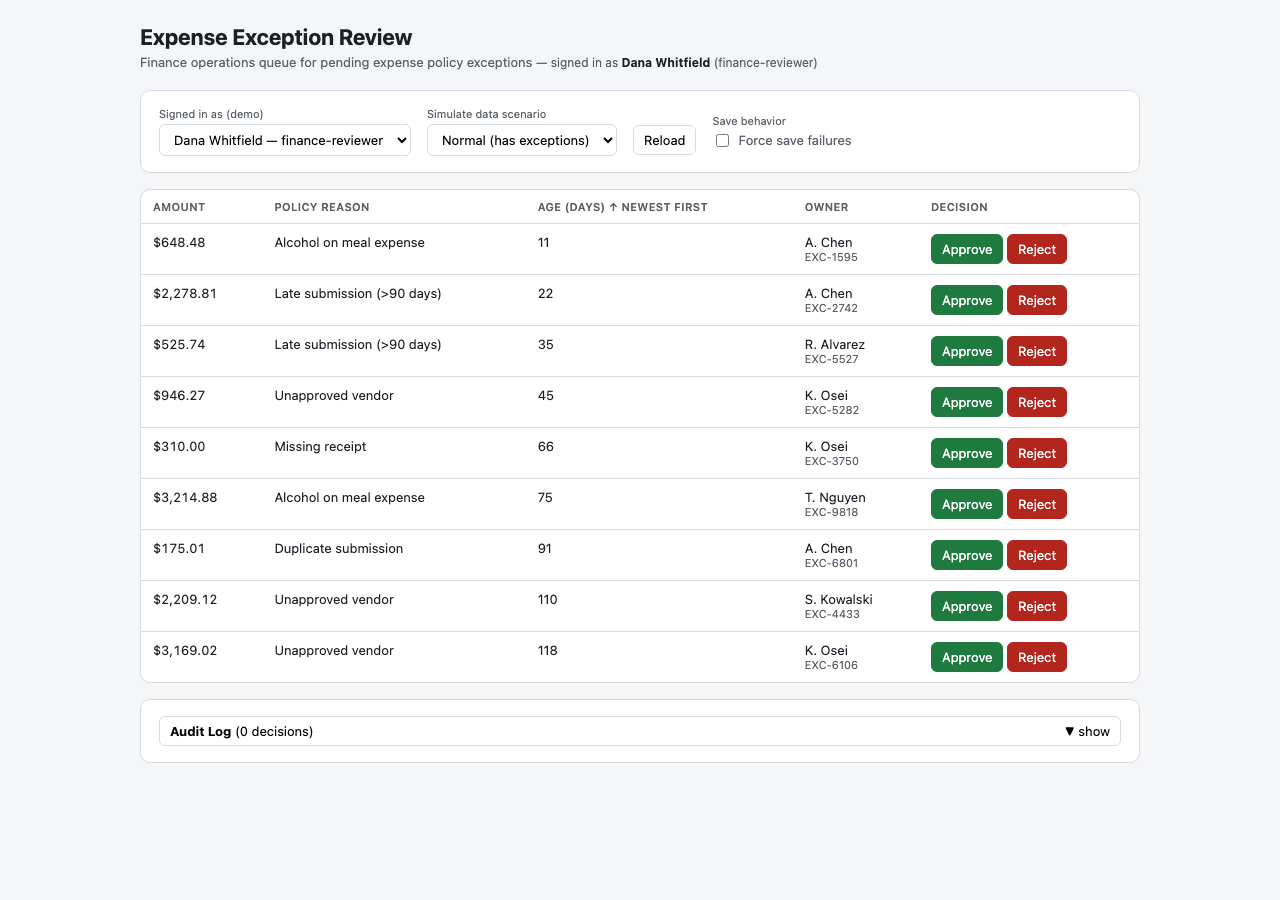
| R2 Fields: amount, policy reason, age in days, owner | PARTIALAmount yes; "violations" ≈ policy reason; no age-in-days; "employee" instead of owner; invents date, category, merchant, department. | PASSExactly the four specified columns.Evidence: sat-loaded.png |
| R3 Table sorted newest first | PARTIALDefaults to "Newest first", a correct guess, not a requirement it knew about. | PASSSorted by age ascending (0 days = newest). |
| R4 Loading state | FAILNone. Its assumptions: "no loading spinners, since there's no real network call to fail." | PASSEvidence: sat-loading.png |
| R5 Empty state: "No pending exceptions" | PARTIALHas a generic "Nothing to review" filter-empty state; wrong copy, different meaning. | PASSExact specified copy.Evidence: sat-empty.png |
| R6 Permission denied: "You do not have access to expense exceptions" | FAILState does not exist. | PASSEvidence: sat-denied.png |
| R7 Service failure: "Could not load exceptions, try again" | FAILState does not exist. | PASSBanner plus a retry button.Evidence: sat-error.png |
| R8 Reviewer can approve or reject each exception | PARTIALApprove/reject exist, plus invented bulk actions, "request more info", comment rules, stat cards, search and filters nobody asked for. | PASSExactly the two requested actions. |
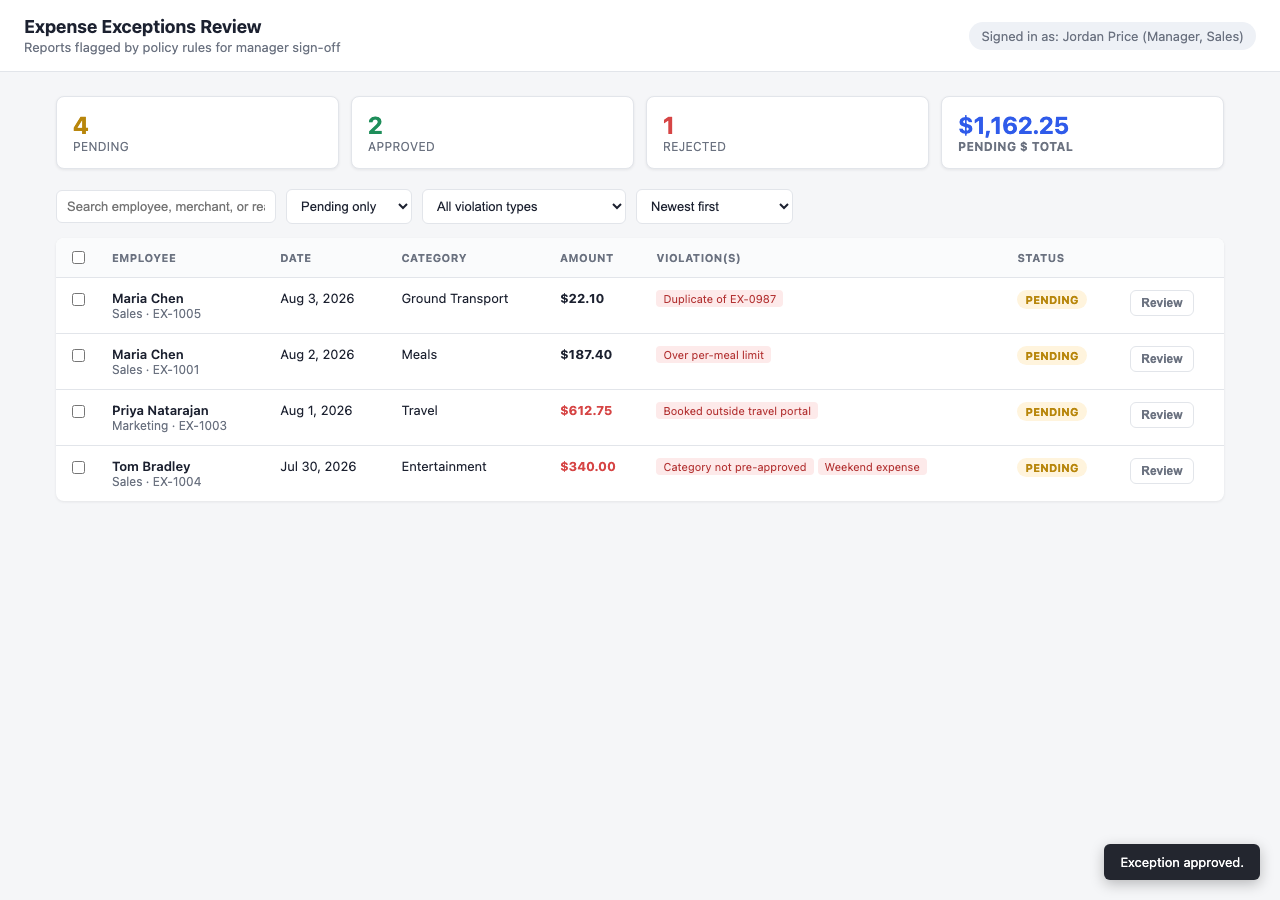
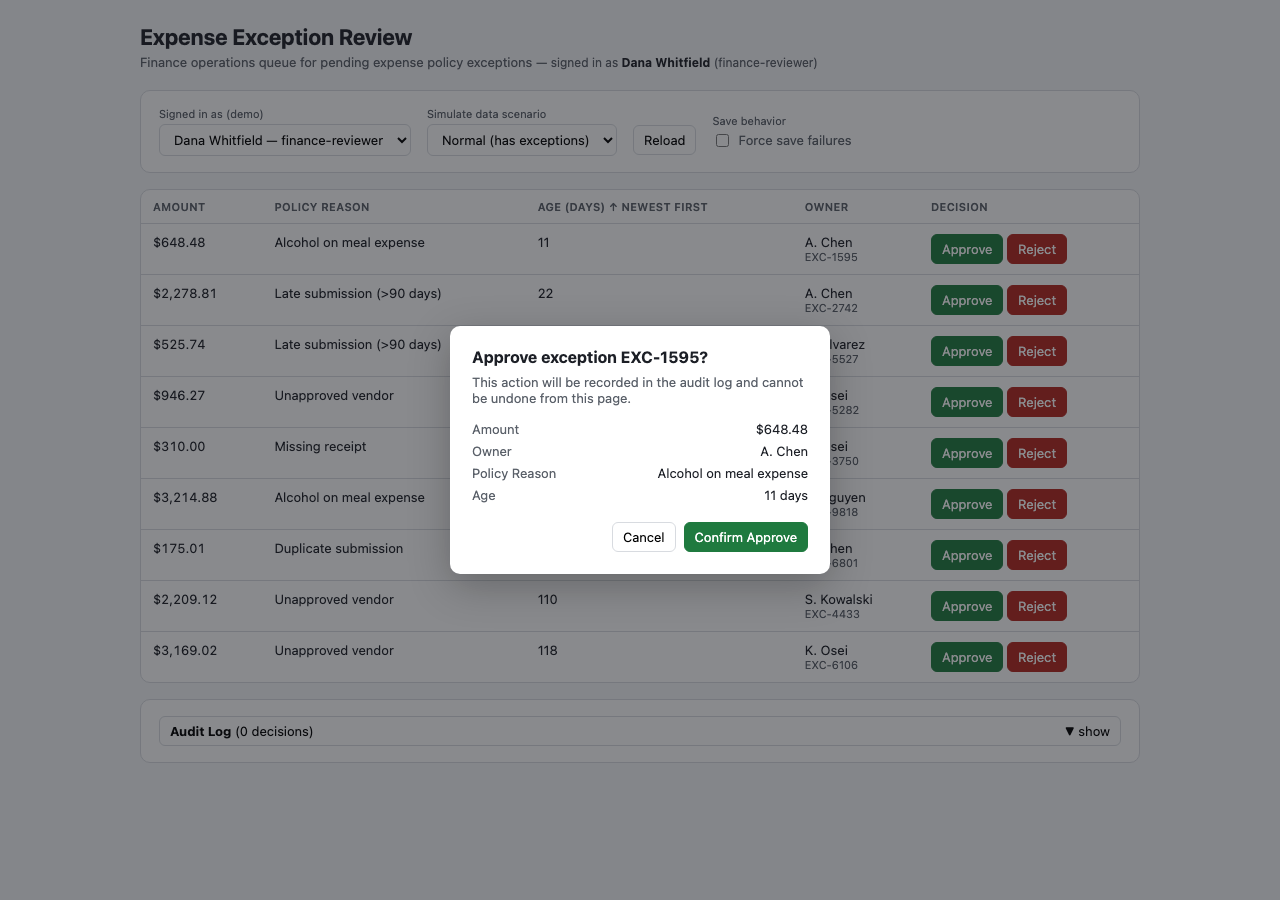
| R9 Explicit confirmation required before any decision takes effect | FAILOne click in the detail modal applies the decision instantly, toast fires, counts change, no confirmation.Evidence: sparse-instant-decision.png | PASSBlocking confirm dialog with the record's details.Evidence: sat-confirm.png |
| R10 A failed save must not show the row as decided | FAILFailure cannot happen: localStorage writes always "succeed", so the page can never be honest about a save that didn't. | PASSRow stays pending with "Could not save decision, try again"; audit log records nothing.Evidence: sat-failedsave.png |
| R11 Audit entry: decision, actor, timestamp, record id | PARTIALPer-item history exists with a hardcoded actor; no page-level log; not visible without opening each record. | PASSAll four fields per entry.Evidence: sat-audit.png |
| R12 Collapsible audit log at the bottom of the page | FAILDoes not exist. | PASSEvidence: sat-audit.png |
| R13 Synthetic demo data, no real systems | PASSSeeded demo data (persists to localStorage). | PASSGenerated in memory per load. |
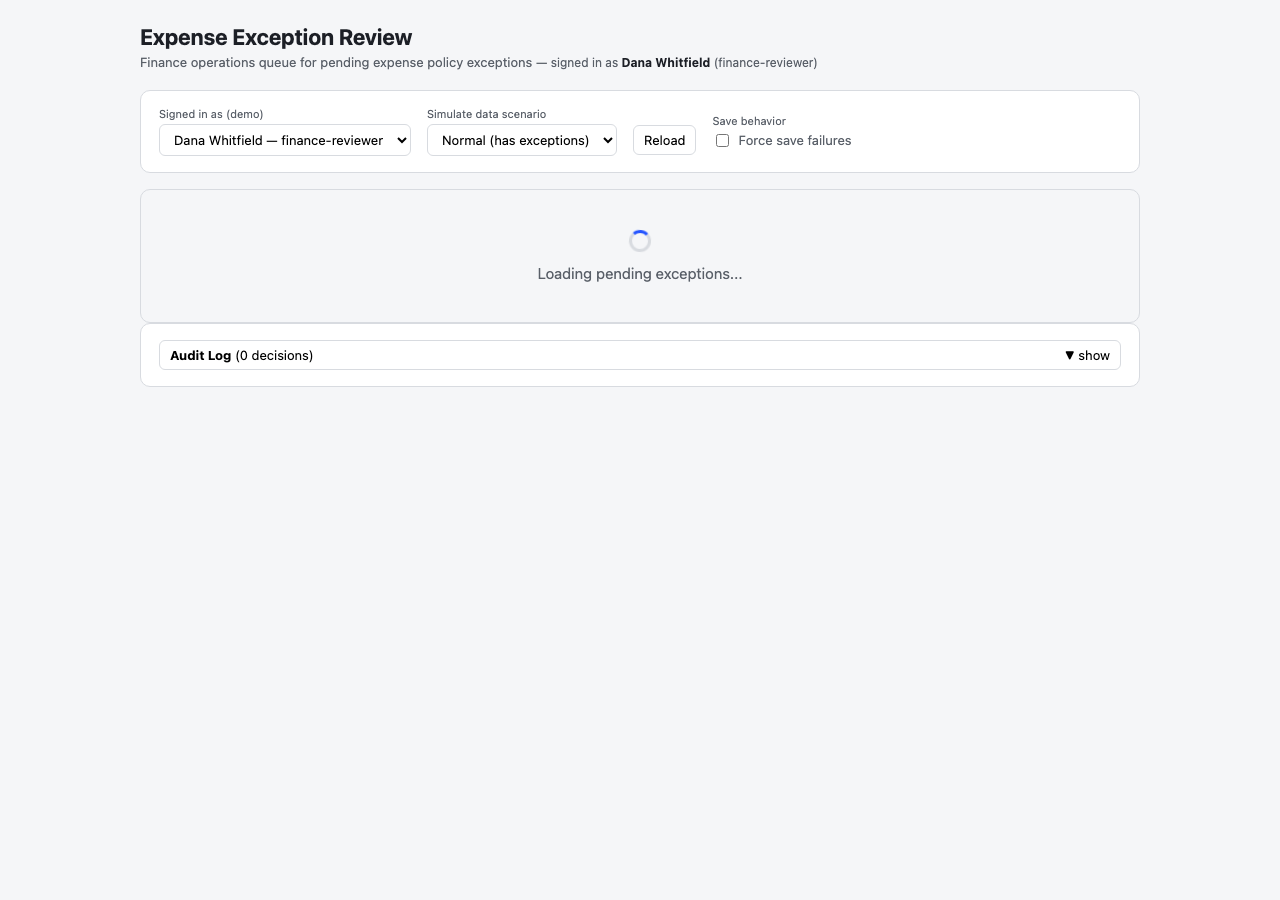
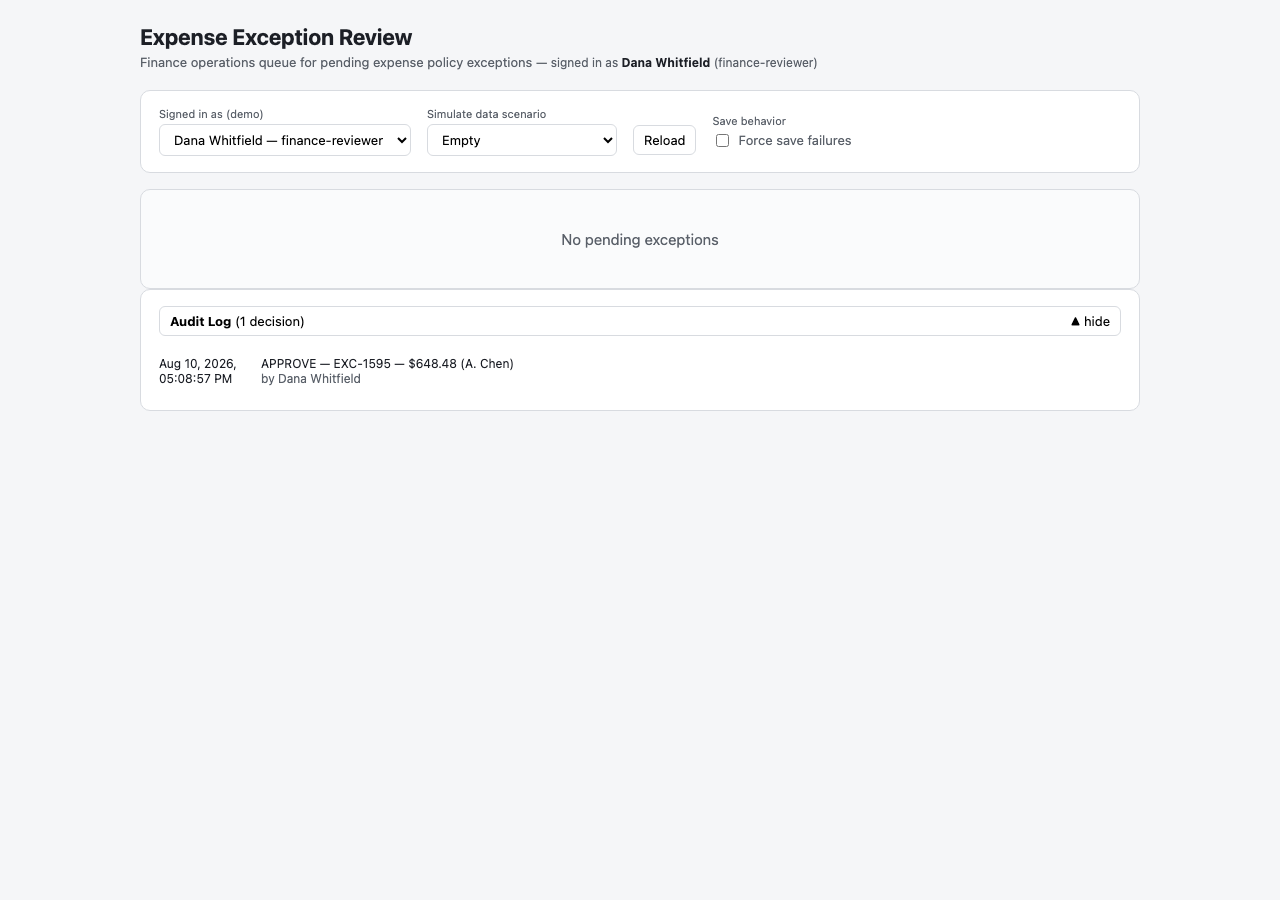
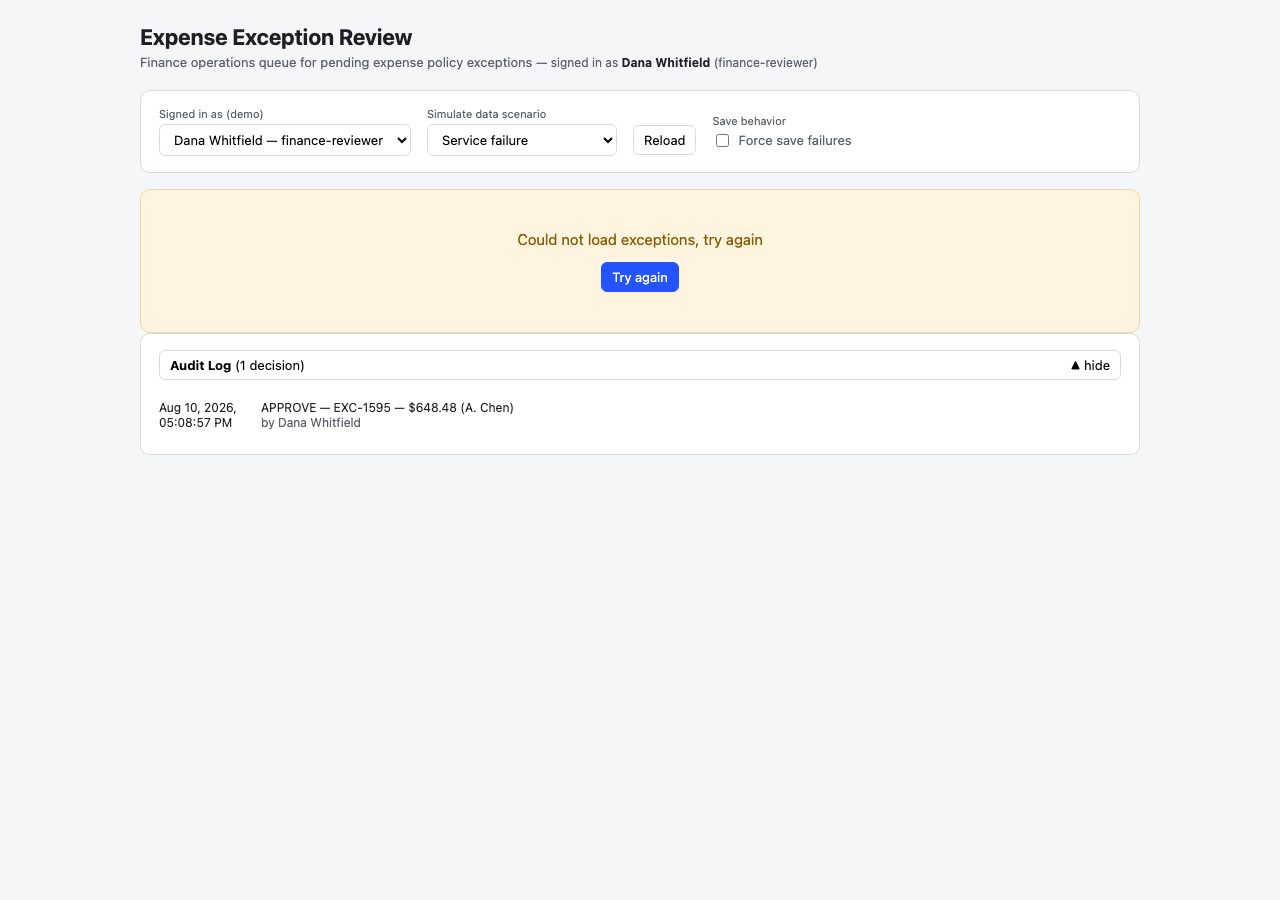
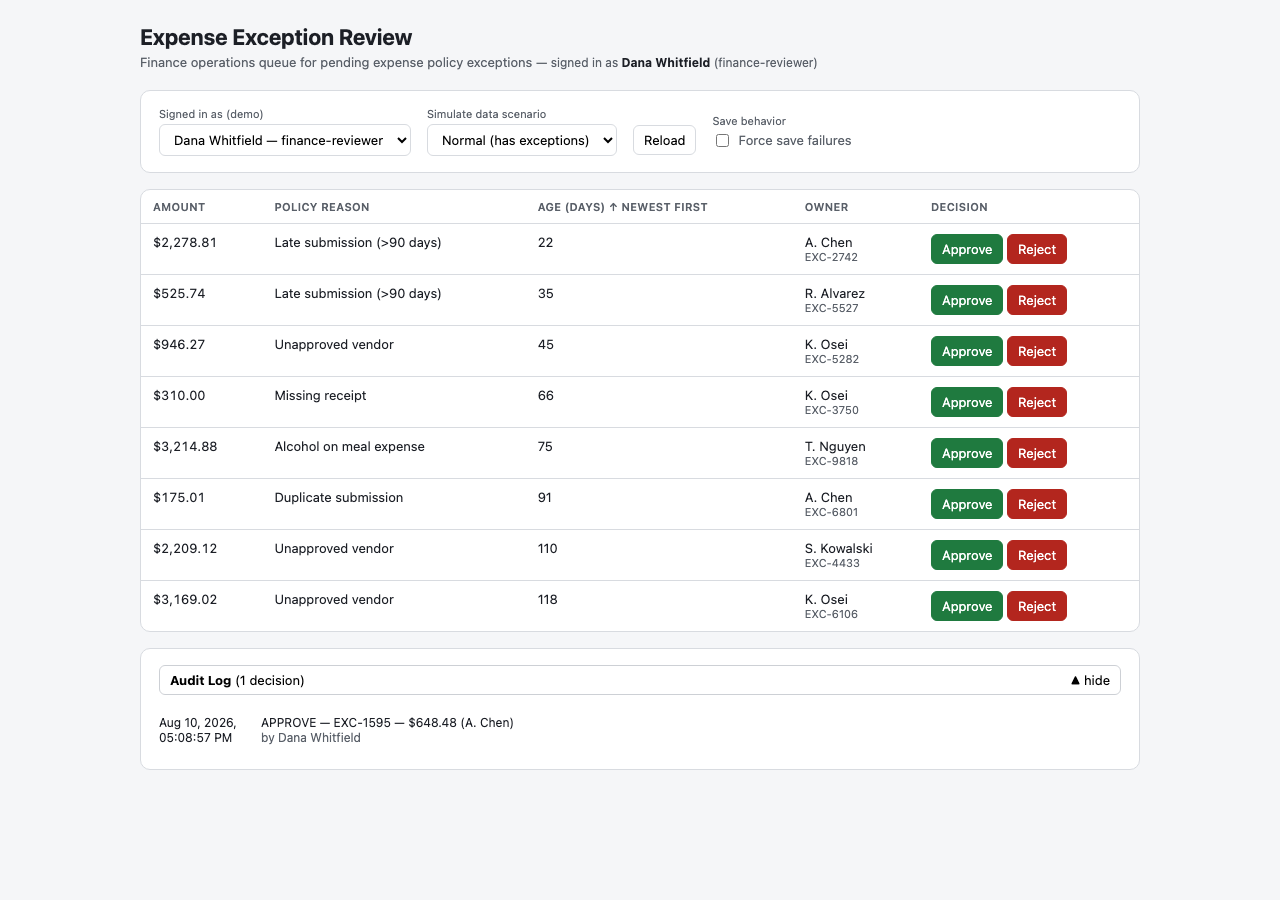
What I found: the sparse build made 24 assumptions and the saturated build made 20, so the model never
stops guessing. What changes is what it guesses about. Sparse: my business decisions, like who can see money data,
whether a decision needs confirmation, and whether a failed save can lie. Saturated: cosmetics, like modal styling and
timestamp formats. And notice which page looks more impressive. The sparse one. When the model doesn't know your
decisions, it fills the gaps with confident decoration.
The two pages, side by side
I ran the same experiment on a diagram, at three levels of saturation: the three-gear diagram report.